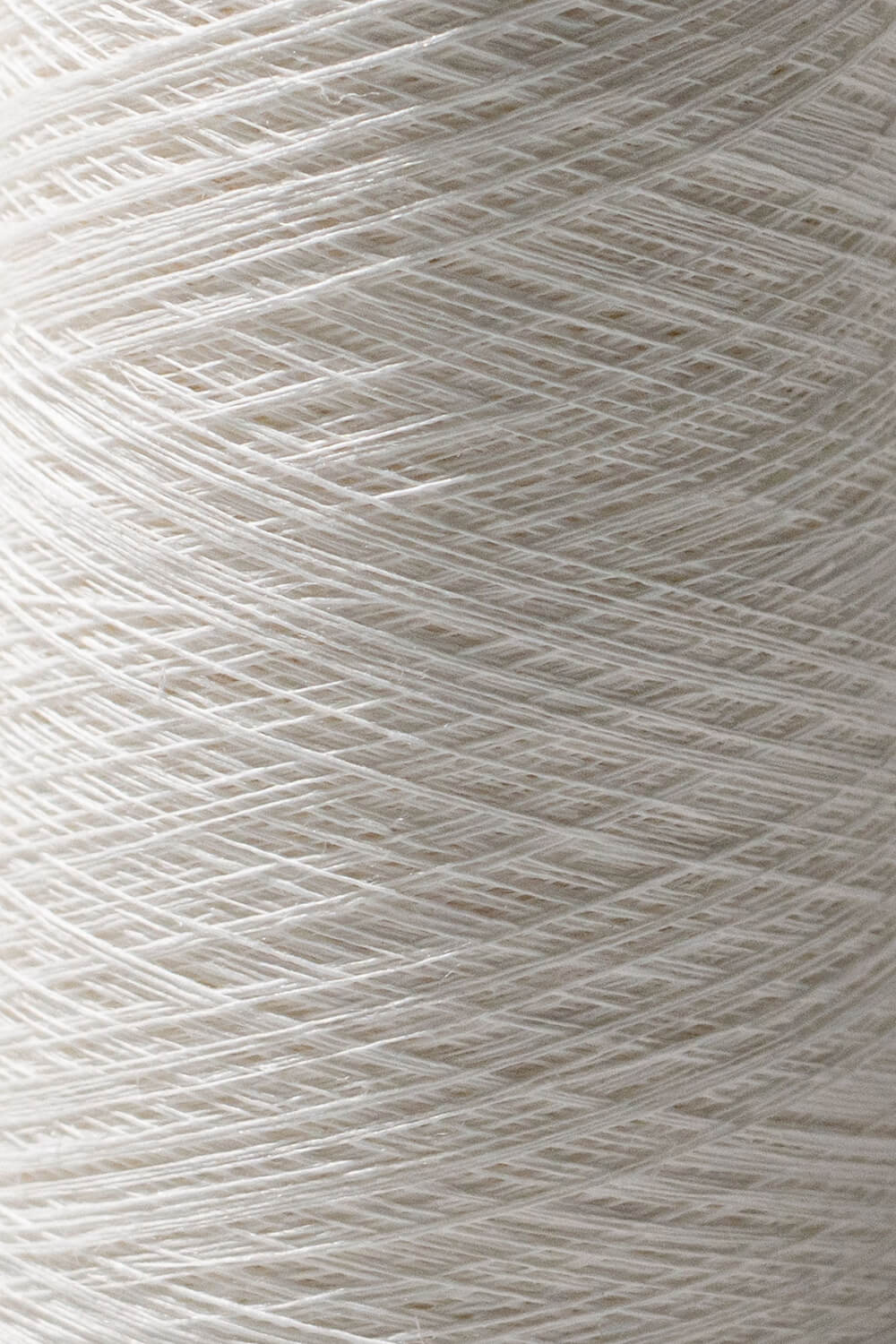
At nest Robe and CONFECT, linen has always been at the center of our garment making. Derived from the flax plant, linen changes its character depending on where it is grown and how it is processed. For us, the beauty of linen lies not only in the material itself, but also in the process behind it. By looking closely at the production background of the fabric—the environment, the techniques, and the subtle differences created through each step—we explore new possibilities for expression through clothing.
RETTING
To extract linen fibers, harvested flax must first undergo a fermentation process known as retting. During this stage, microorganisms break down the plant structure, gradually separating the fibers from the stem. This process plays a crucial role in determining the character of the linen. There are different retting methods depending on the region and environment. Some flax is laid out in fields and exposed to dew and rain, allowing fermentation to occur naturally. Others are submerged in water, where microorganisms work through immersion. These differences in process create subtle variations not only in texture, but also in the natural color of the fiber.
NATURAL DIFFERENCE
Patterns do not always have to be created through dyeing. By combining yarns with slightly different natural tones, it is possible to express patterns that originate from the material itself. Rather than adding color artificially, we focus on revealing the inherent beauty found in linen. The Retting Stripe is created without dye.
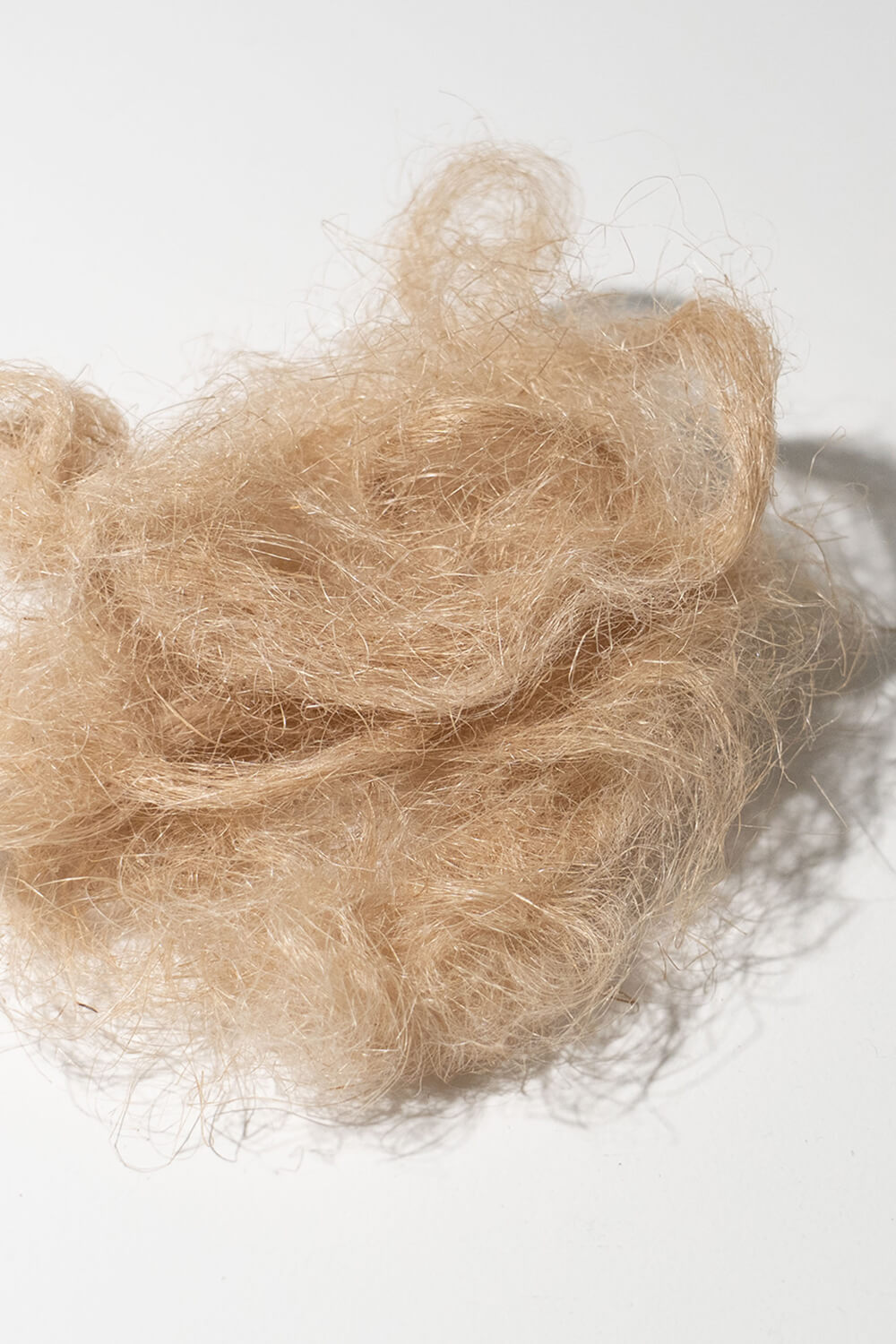
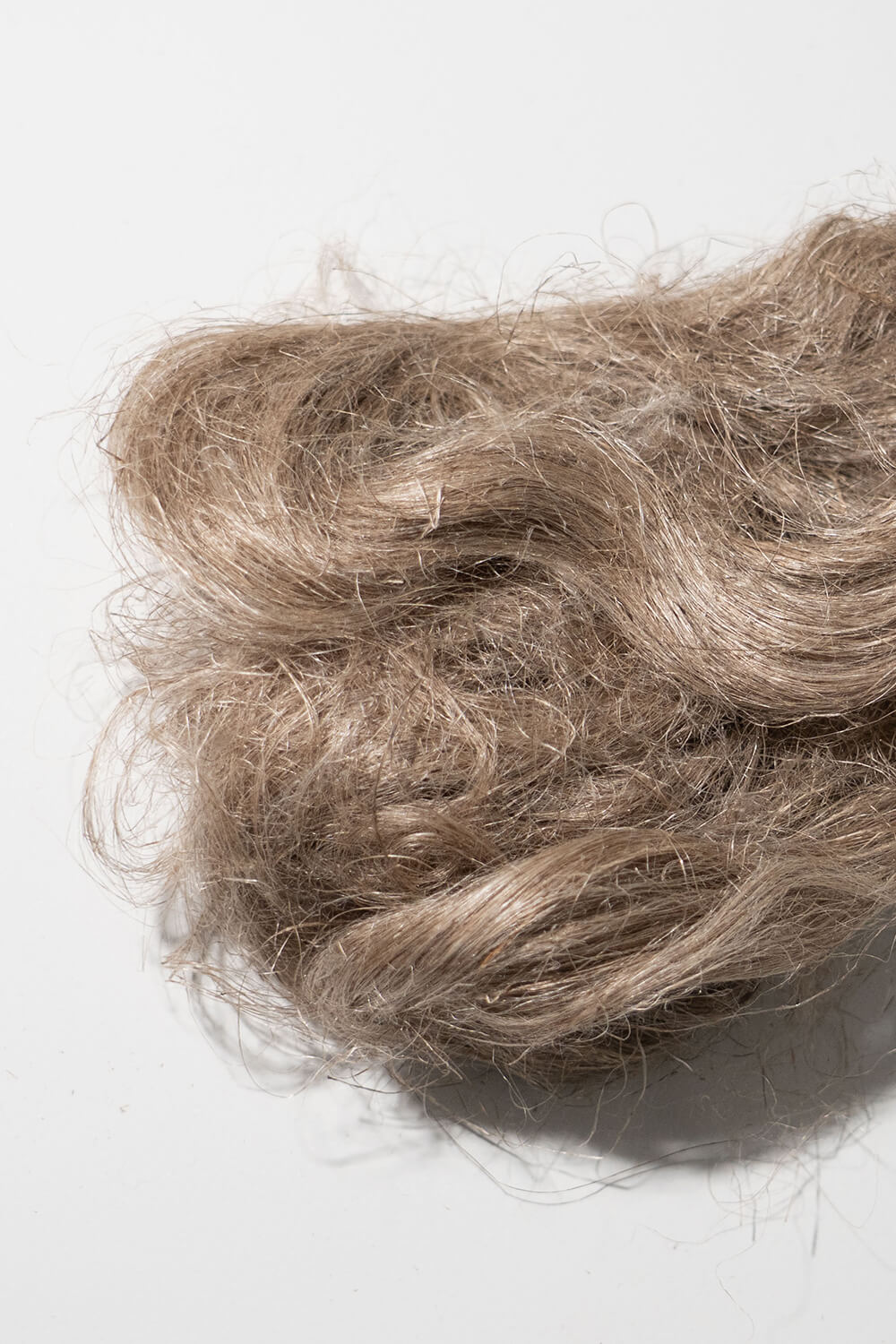
The stripe pattern emerges from the natural color differences produced during the retting process. European flax processed through dew retting results in a greyish natural tone. Egyptian flax processed through water retting produces a yellowish natural tone. By weaving together these natural variations, we created a stripe pattern formed entirely by the character of linen itself.

RETTING STRIPE COLLECTION
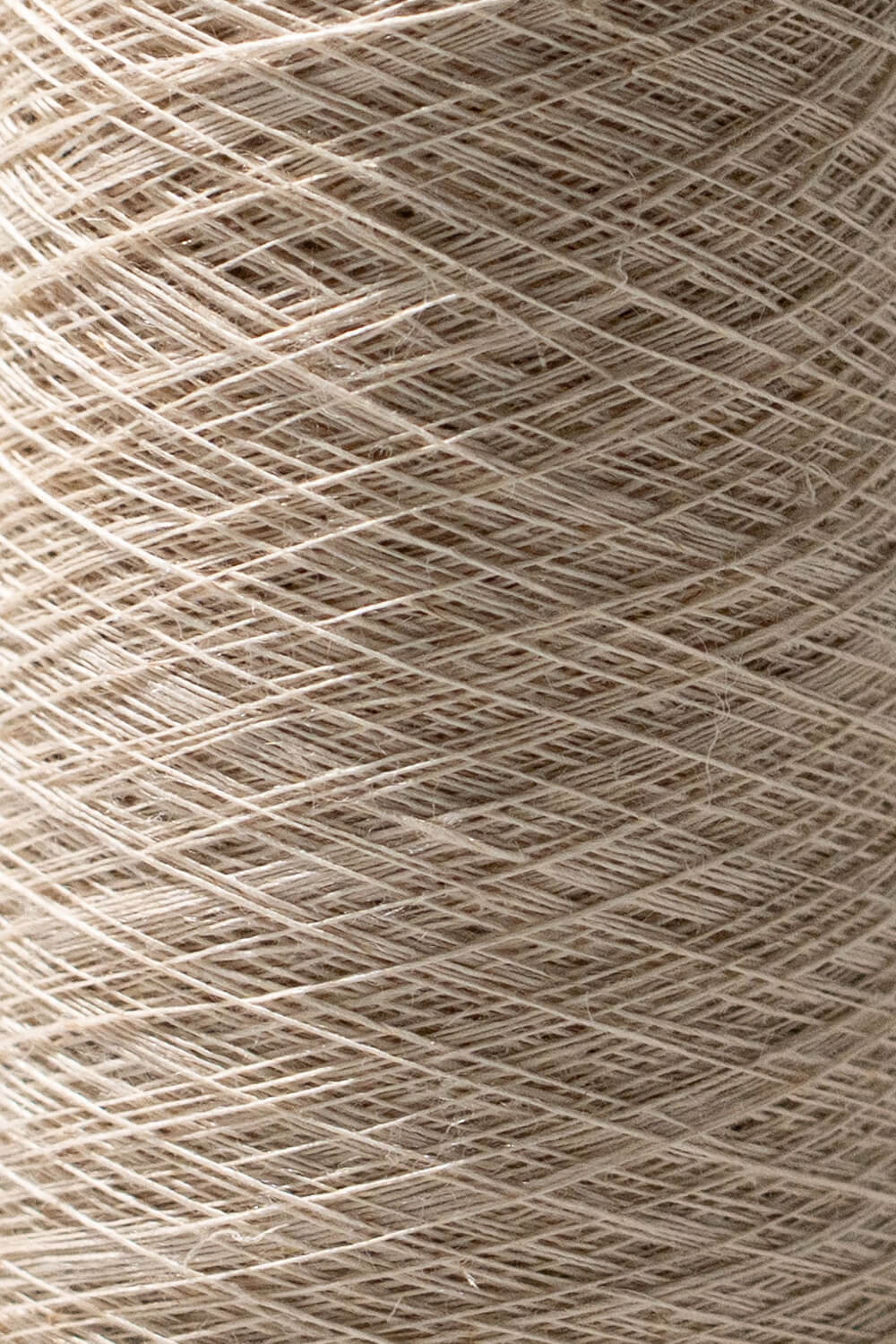
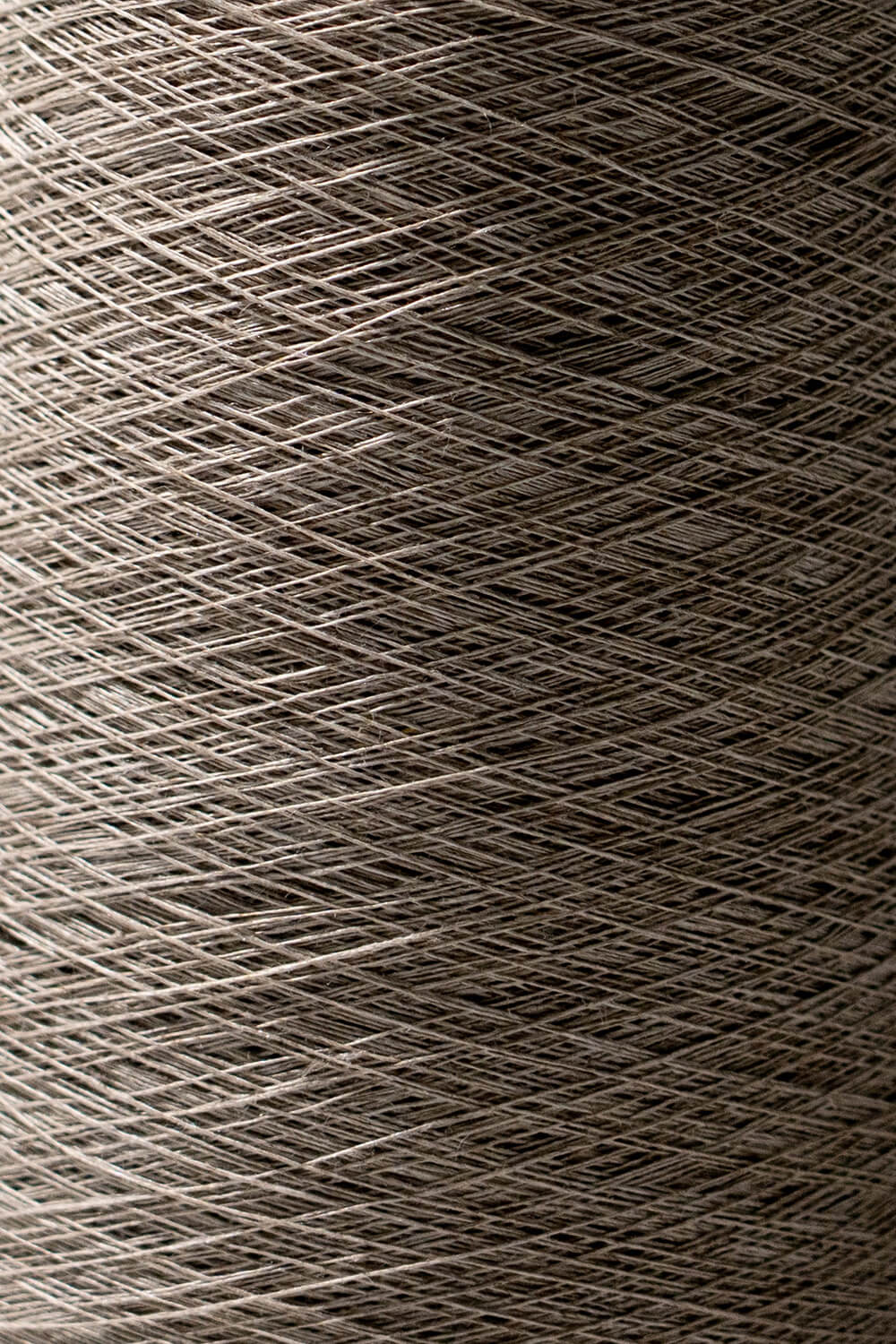
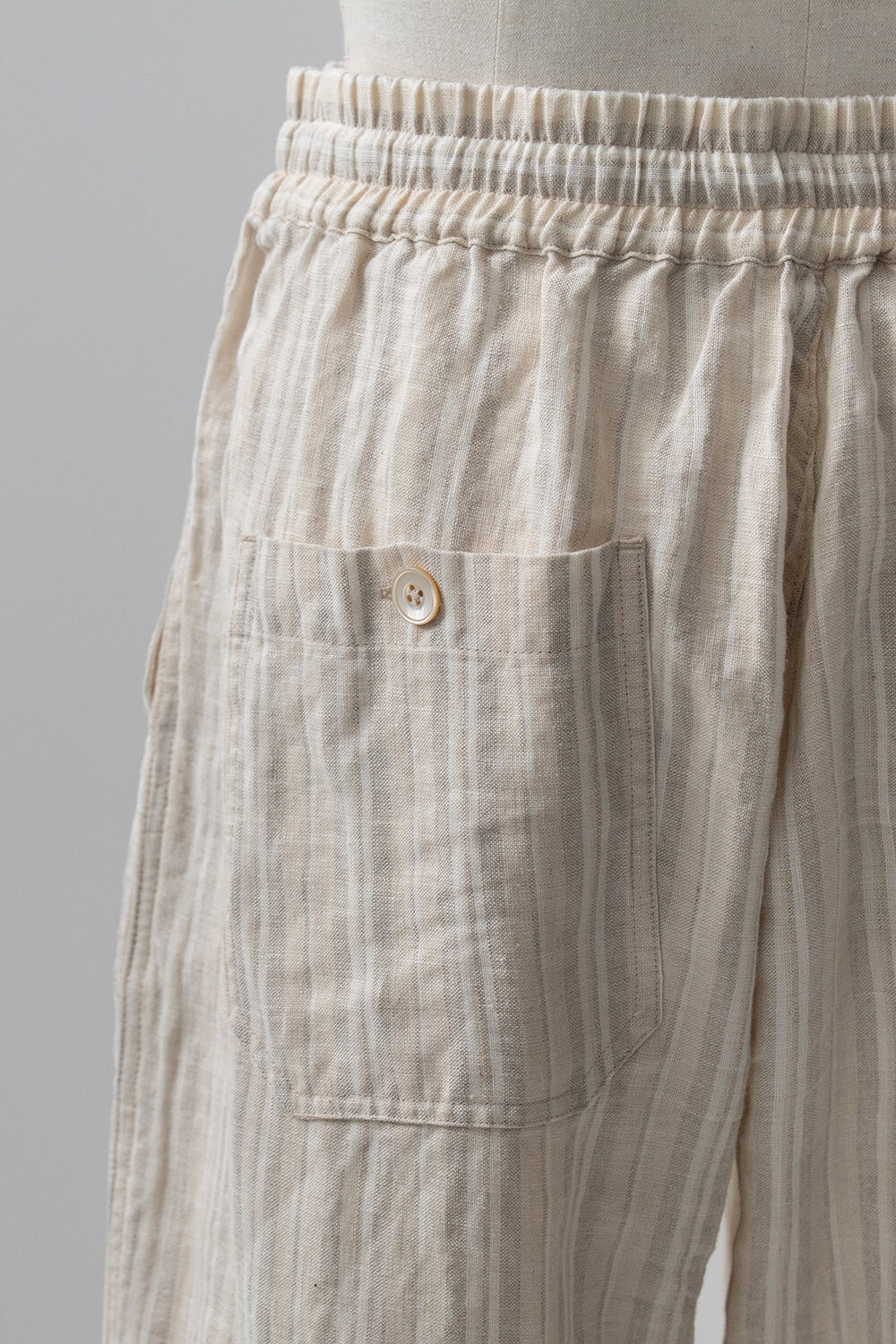
This fabric was developed from a simple idea: Can a stripe be created using only the natural colors of linen? Both warp and weft are woven with 25-count linen yarn in a plain weave, allowing the texture of the fiber to appear clearly. Grey-toned natural linen from European flax (dew retting). Yellow-toned natural linen from Egyptian flax (water retting). And bleached linen yarn. By arranging these three tones together, the fabric forms a stripe pattern that expresses the natural depth of linen—without relying on dye.


Linen Natural Stripe Oversized Shirt
style no : 01261-1086
size : FREE
price : JPY 34,000
→ Online Shop


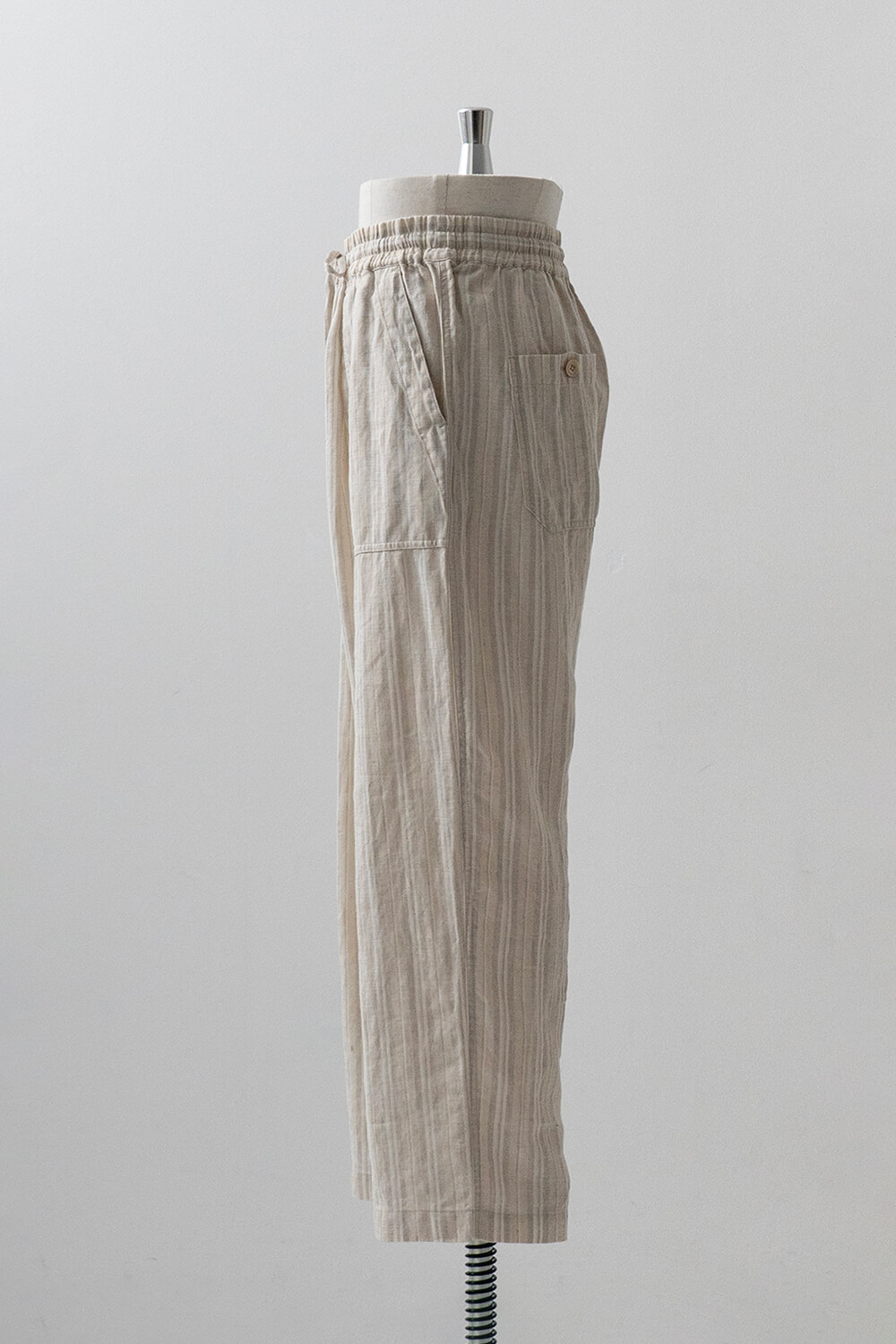
Linen Natural Stripe Easy Fit Trousers
style no : 01261-1085
size : FREE
price : JPY 33,000
→ Online Shop


Linen Natural Stripe Oversized Shirt
Cotton Linen Sleeveless Jersey
Linen Natural Stripe Easy-fit Trousers
Paraboot


Linen Natural Stripe Jacket
style no : 02261-0008
size : 3,4
price : JPY 45,000
→ Online Shop


Linen Natural Stripe Easy Fit Trousers
style no : 02261-0009
size : 3,4
price : JPY 33,000
→ Online Shop

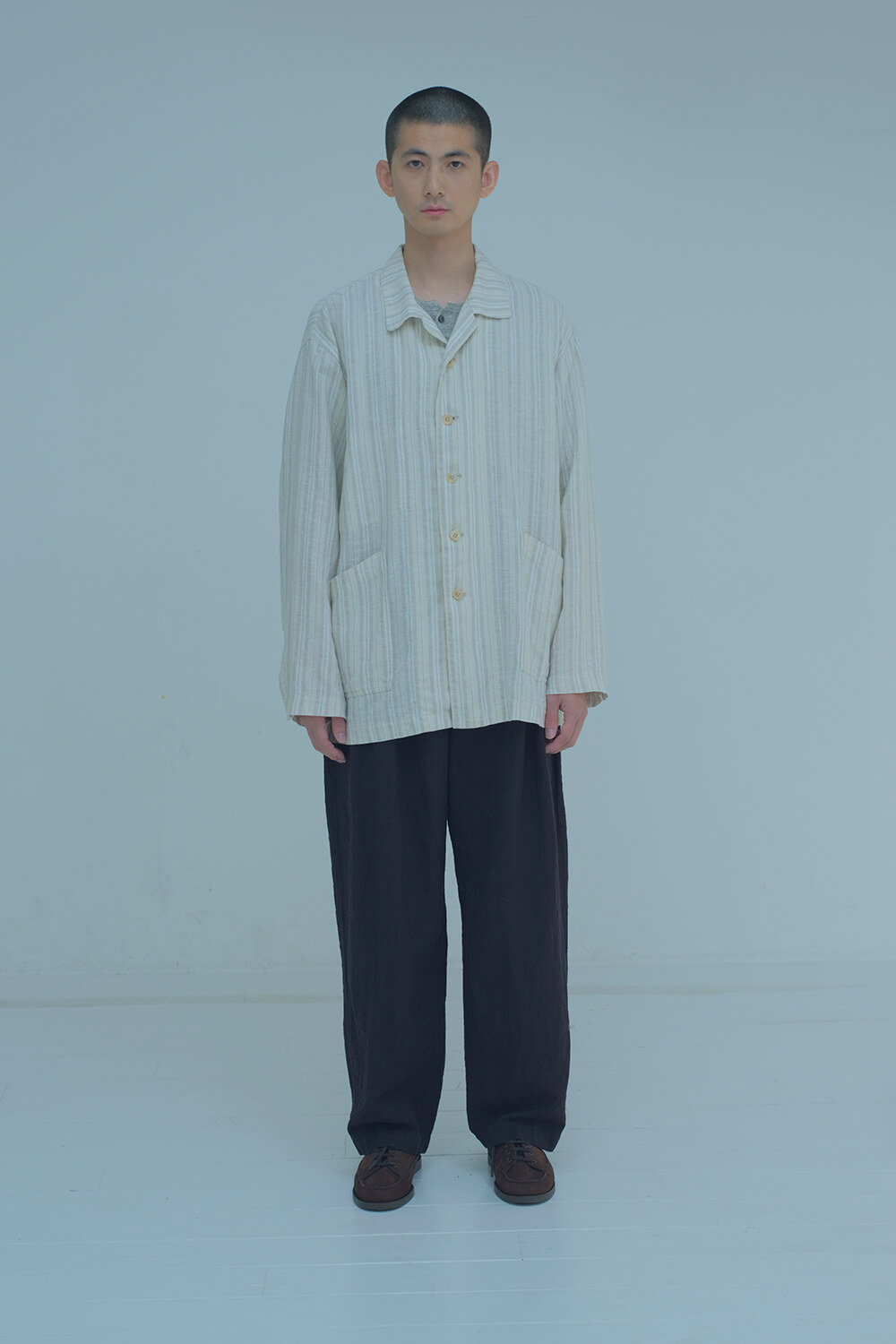
JACKET - Naturally Colored Linen Natural Stripe Jacket
TOP - Cotton Waffle Henry Neck Short-Sleeve Knit Pullover
TROUSERS - Wool Linen Trousers
SHOES - Paraboot


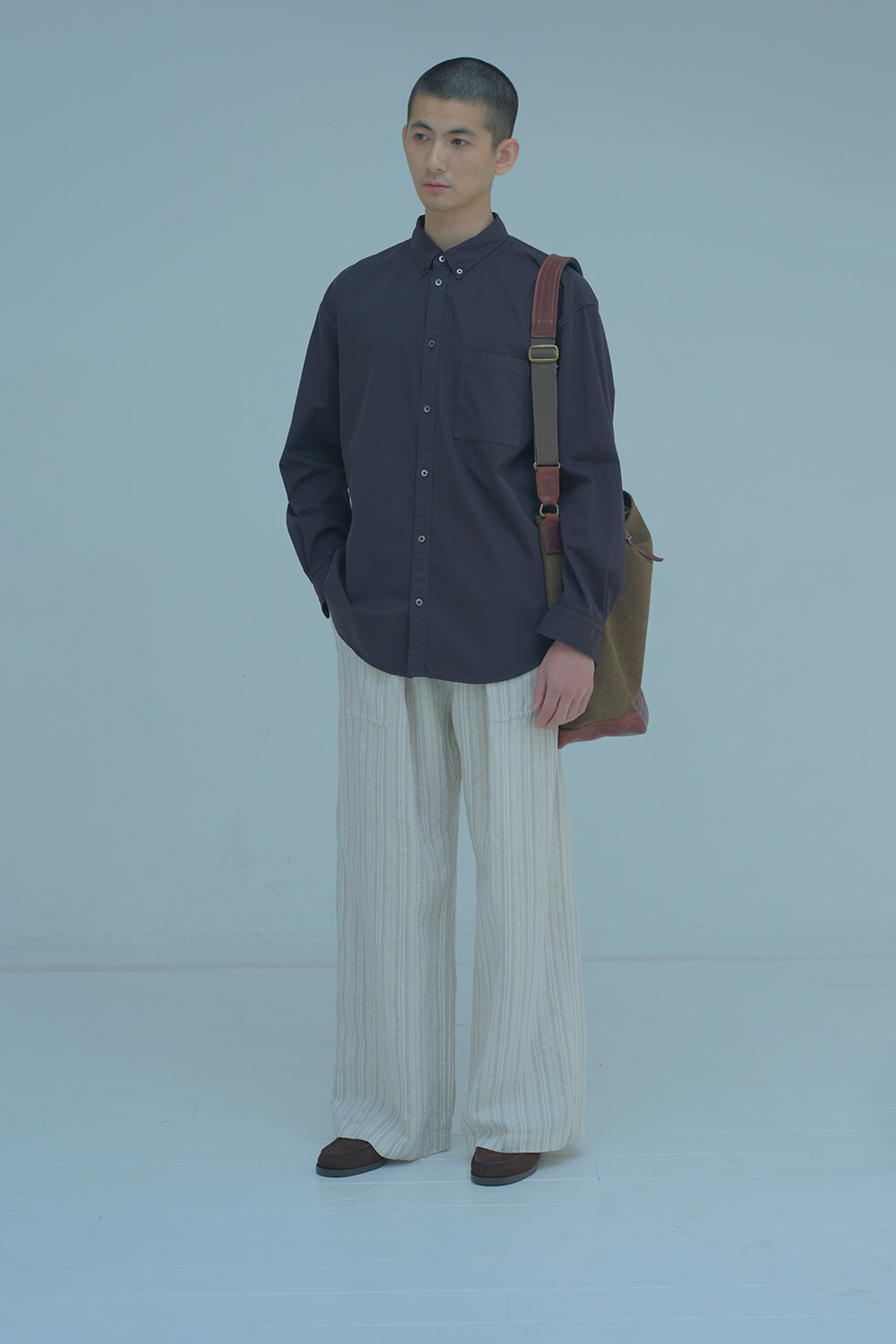
SHIRT - Nidom Finished Twill Button-Down Shirt
TROUSERS - Naturally Colored Linen Stripe Easy Fit Pants
BAG - ARTS&CRAFTS
SHOES - Paraboot
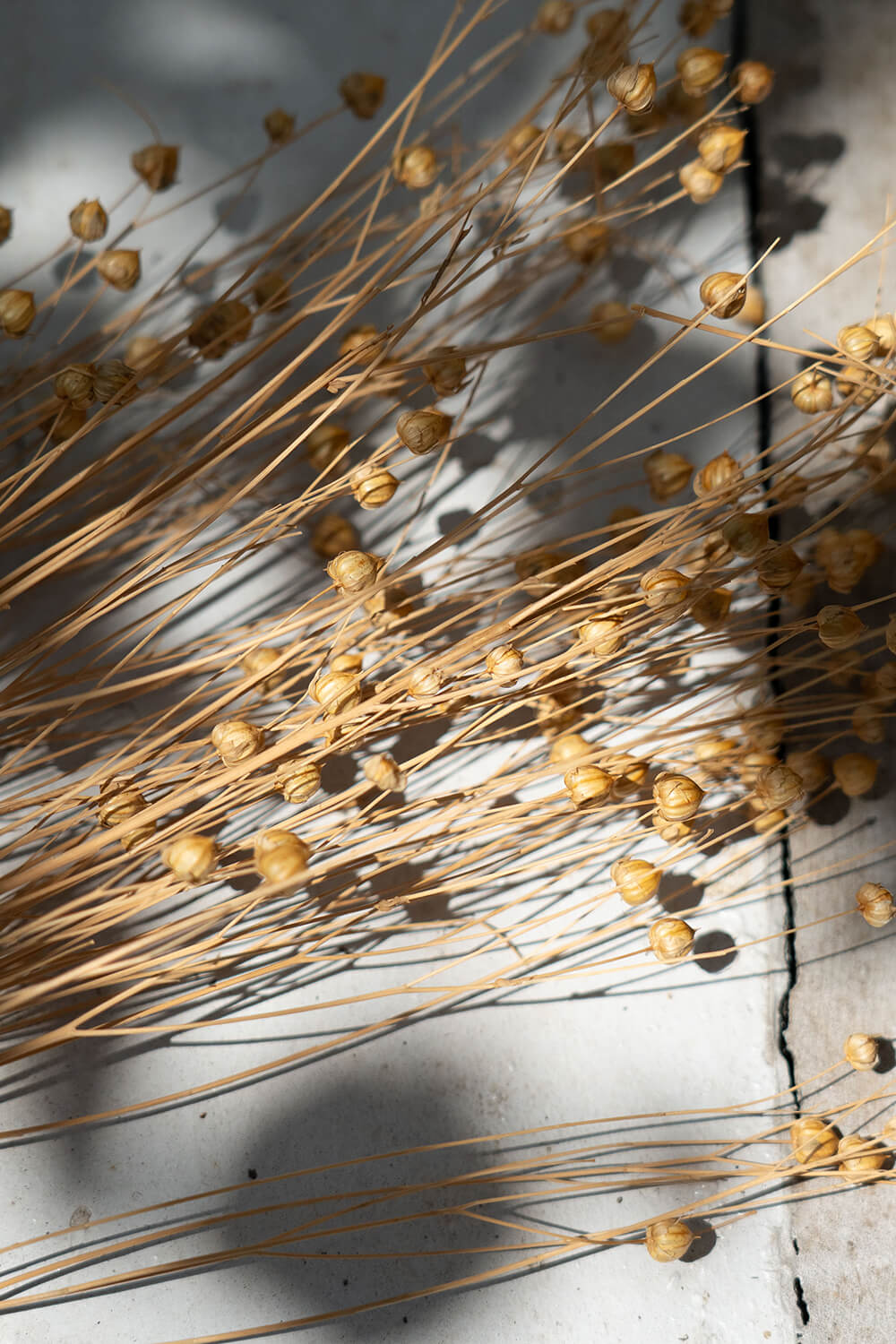
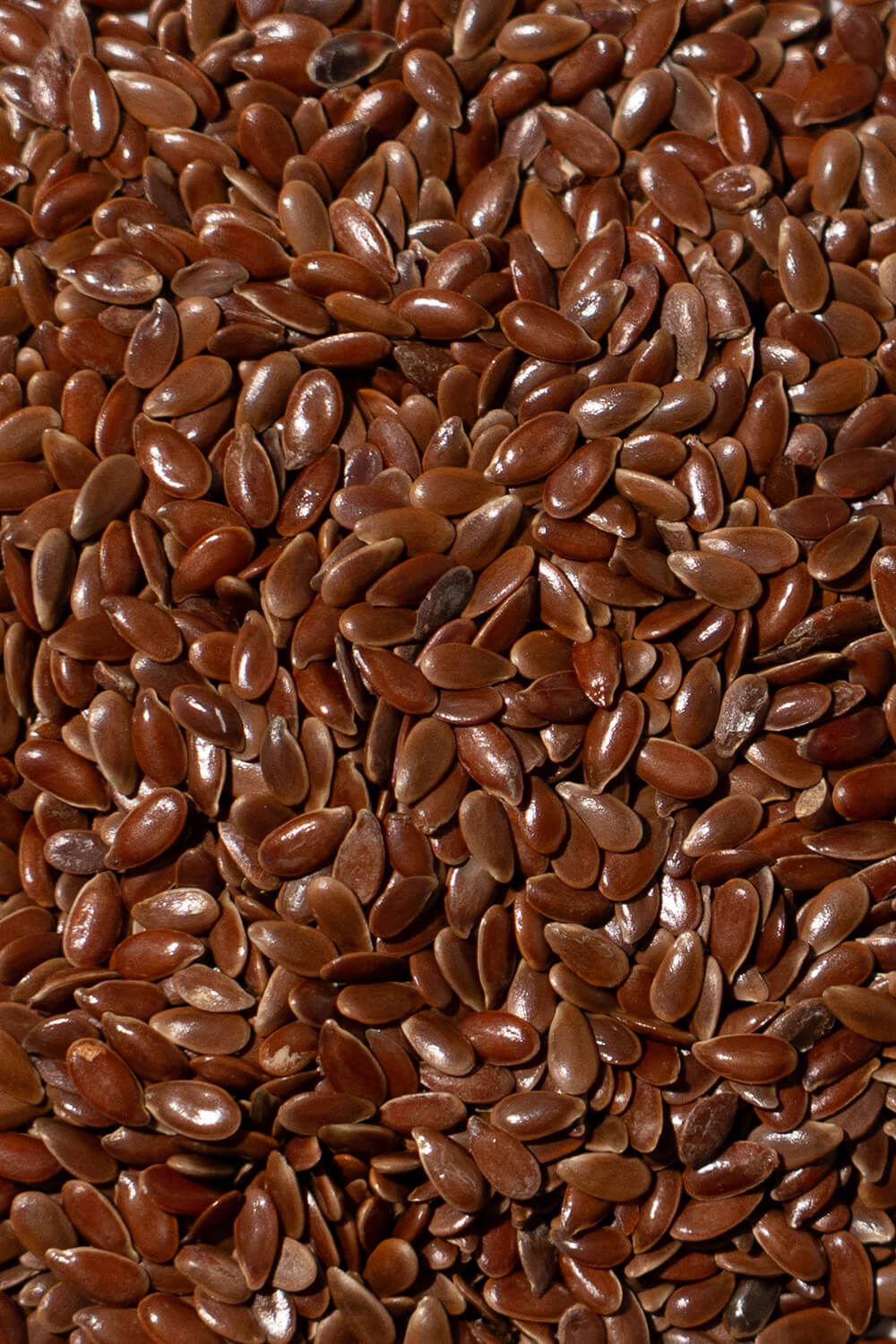
At nest Robe and CONFECT, linen has always been at the center of our garment making. Derived from the flax plant, linen changes its character depending on where it is grown and how it is processed. For us, the beauty of linen lies not only in the material itself, but also in the process behind it. By looking closely at the production background of the fabric—the environment, the techniques, and the subtle differences created through each step—we explore new possibilities for expression through clothing.
RETTING
To extract linen fibers, harvested flax must first undergo a fermentation process known as retting. During this stage, microorganisms break down the plant structure, gradually separating the fibers from the stem. This process plays a crucial role in determining the character of the linen. There are different retting methods depending on the region and environment. Some flax is laid out in fields and exposed to dew and rain, allowing fermentation to occur naturally. Others are submerged in water, where microorganisms work through immersion. These differences in process create subtle variations not only in texture, but also in the natural color of the fiber.
NATURAL DIFFERENCE
Patterns do not always have to be created through dyeing. By combining yarns with slightly different natural tones, it is possible to express patterns that originate from the material itself. Rather than adding color artificially, we focus on revealing the inherent beauty found in linen. The Retting Stripe is created without dye.
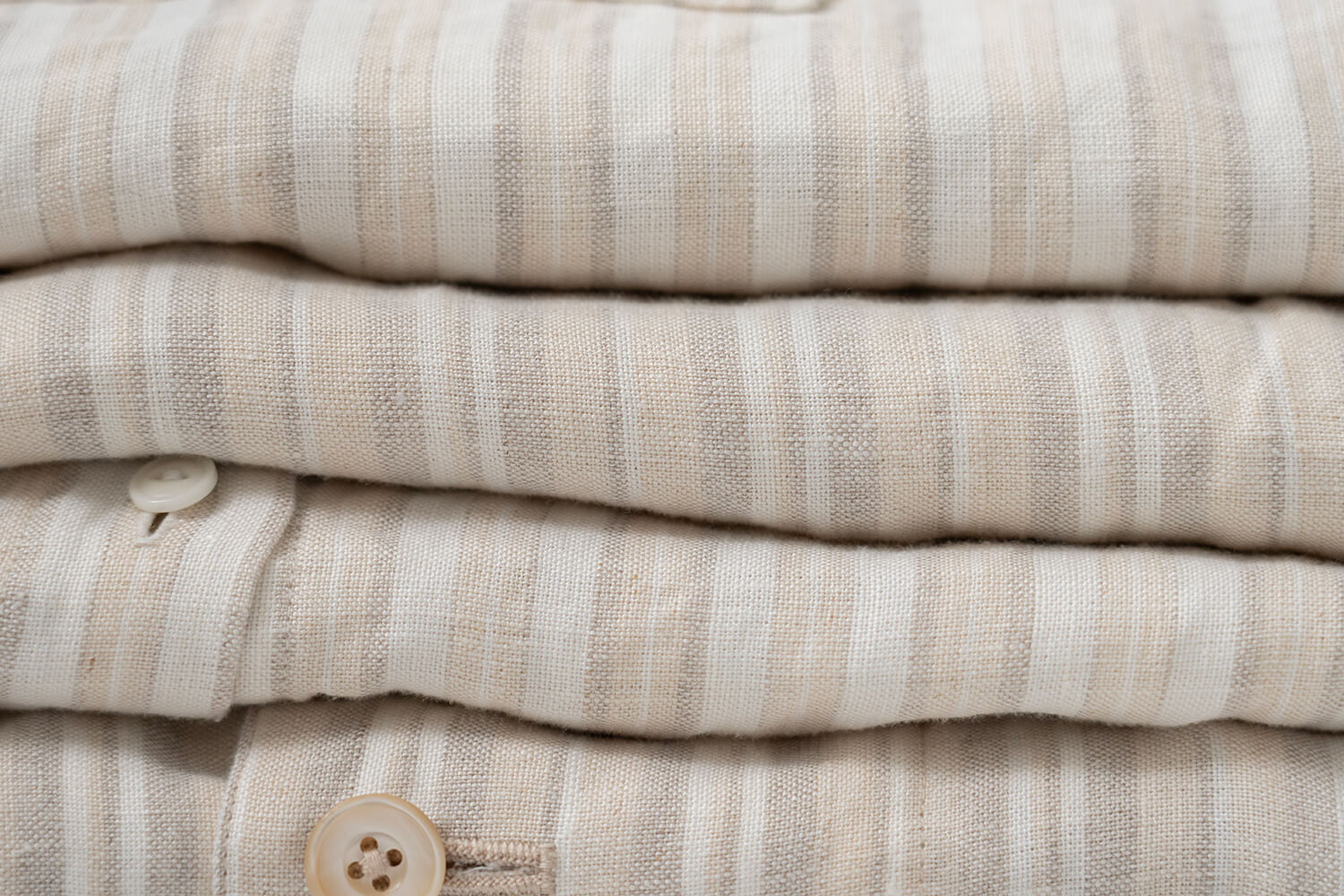
The stripe pattern emerges from the natural color differences produced during the retting process. European flax processed through dew retting results in a greyish natural tone. Egyptian flax processed through water retting produces a yellowish natural tone. By weaving together these natural variations, we created a stripe pattern formed entirely by the character of linen itself.
RETTING STRIPE COLLECTION
This fabric was developed from a simple idea: Can a stripe be created using only the natural colors of linen? Both warp and weft are woven with 25-count linen yarn in a plain weave, allowing the texture of the fiber to appear clearly. Grey-toned natural linen from European flax (dew retting). Yellow-toned natural linen from Egyptian flax (water retting). And bleached linen yarn. By arranging these three tones together, the fabric forms a stripe pattern that expresses the natural depth of linen—without relying on dye.
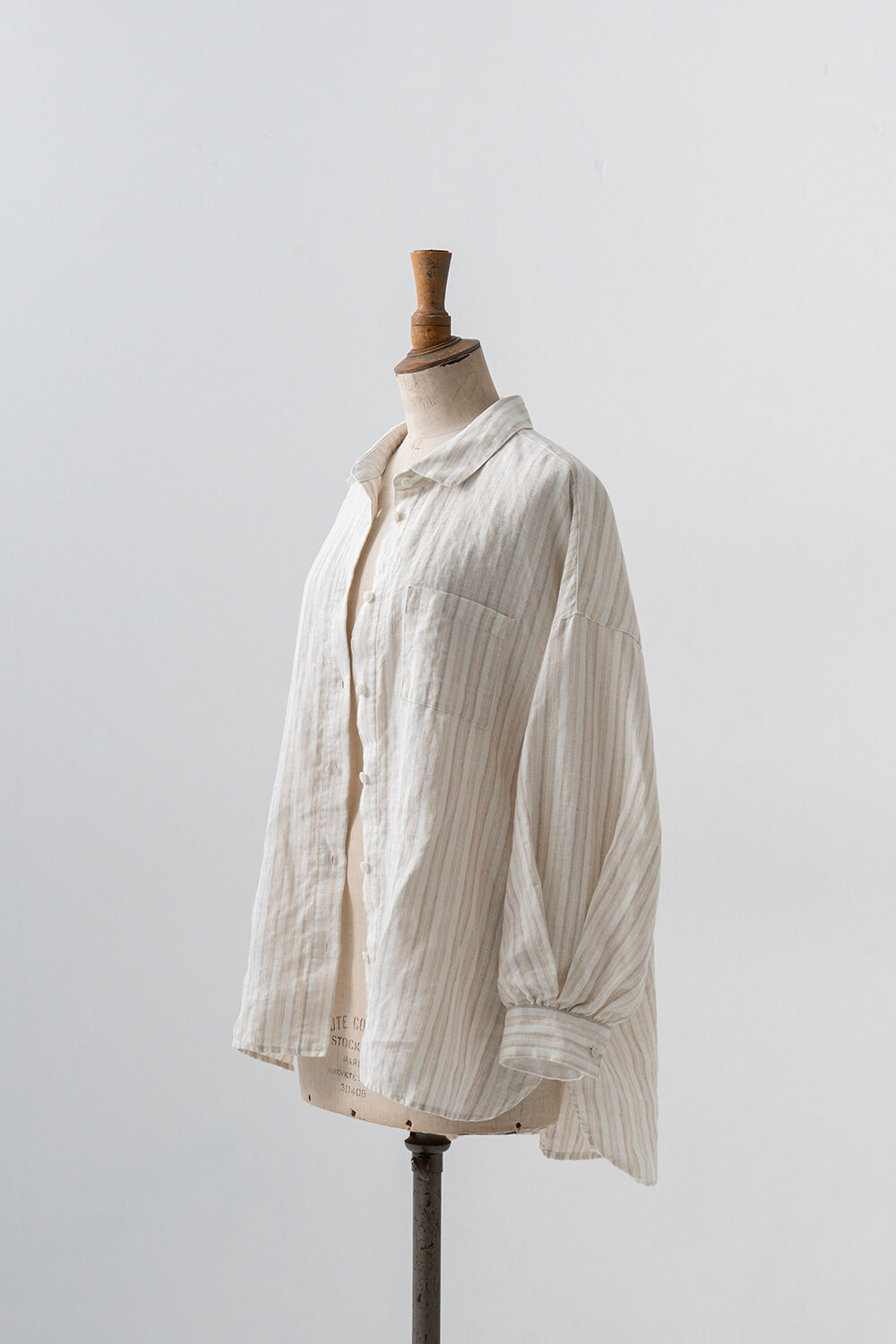
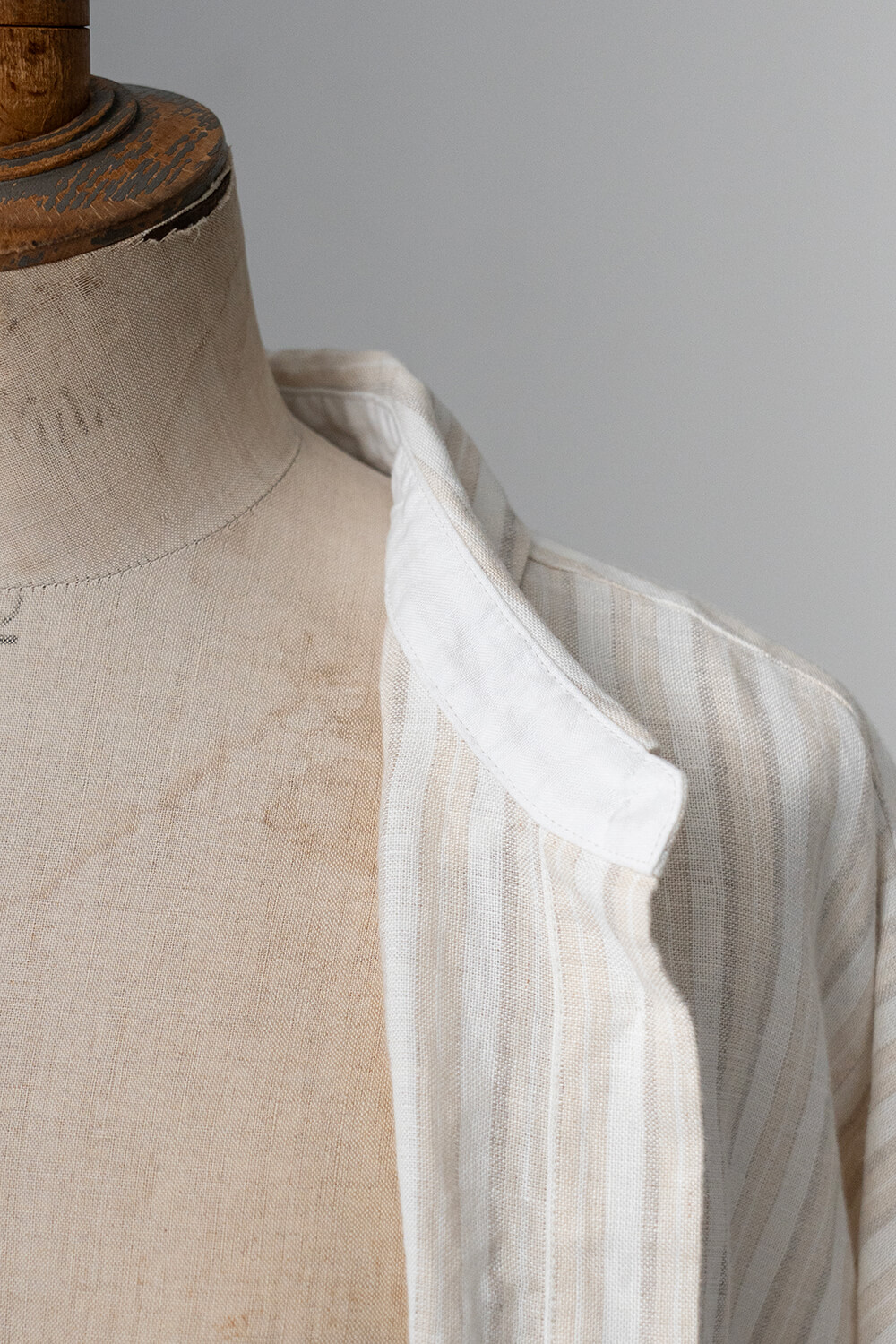
Linen Natural Stripe Oversized Shirt
style no : 01261-1086
size : FREE
price : JPY 34,000
→ Online Shop
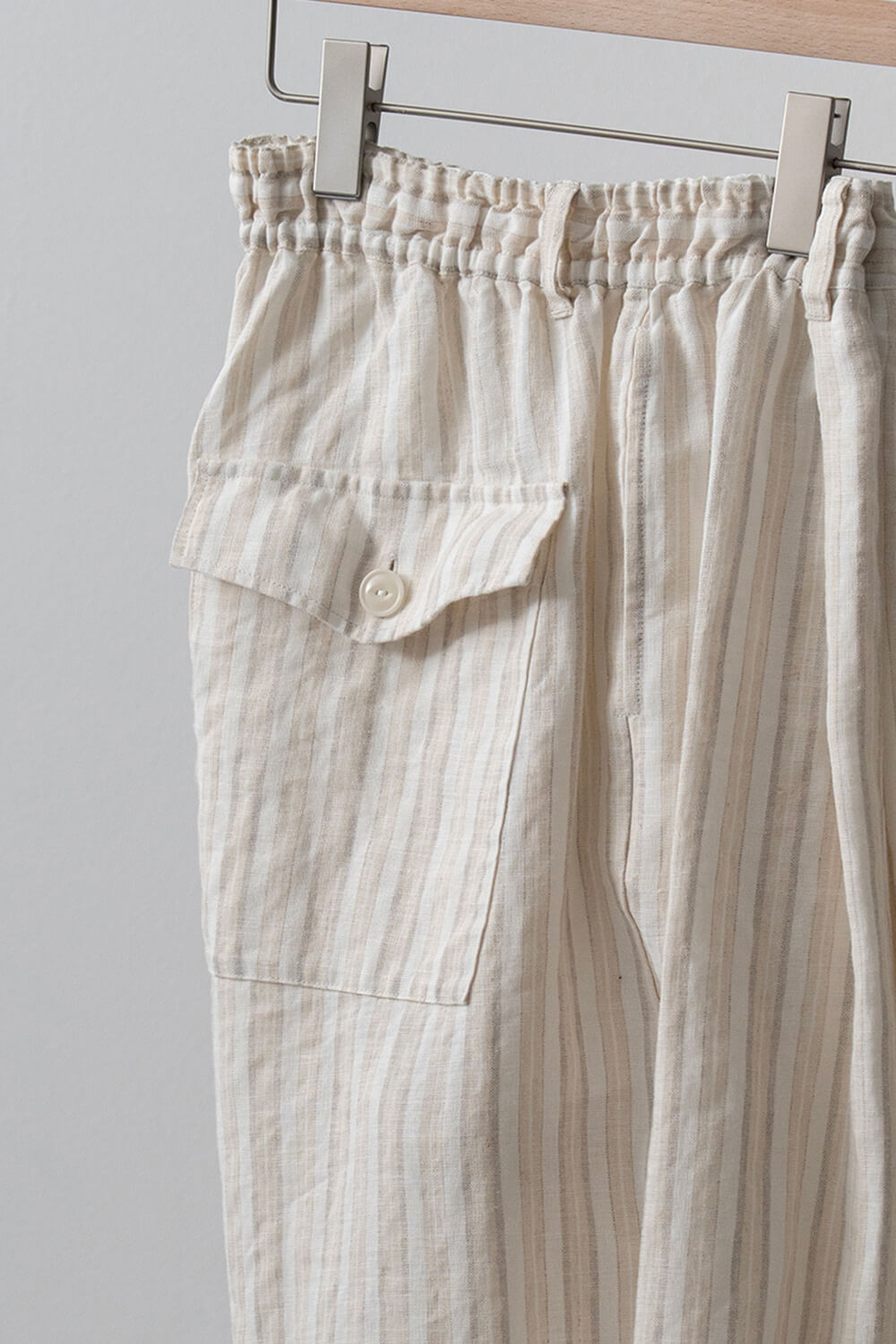
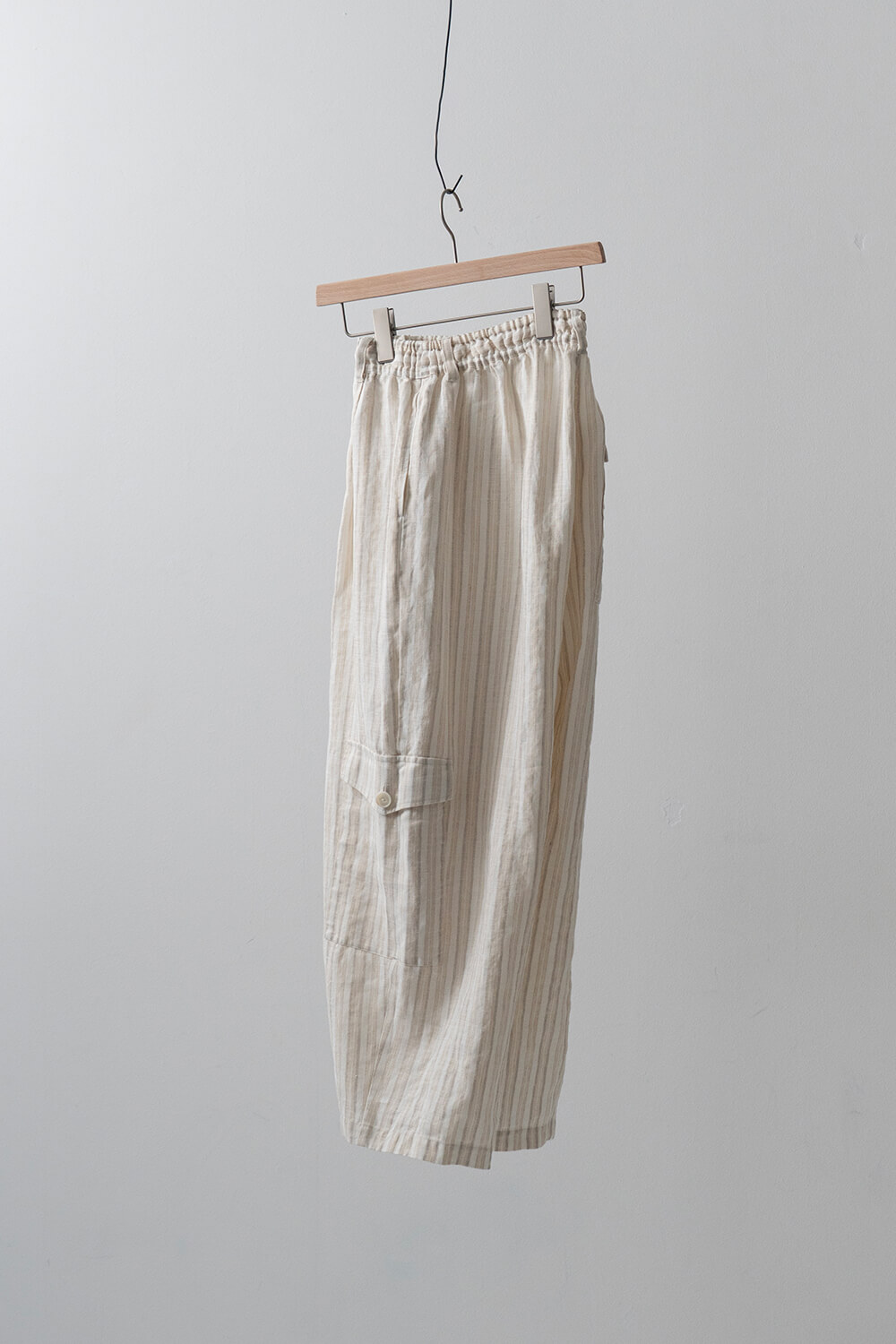
Linen Natural Stripe Easy Fit Trousers
style no : 01261-1085
size : FREE
price : JPY 33,000
→ Online Shop
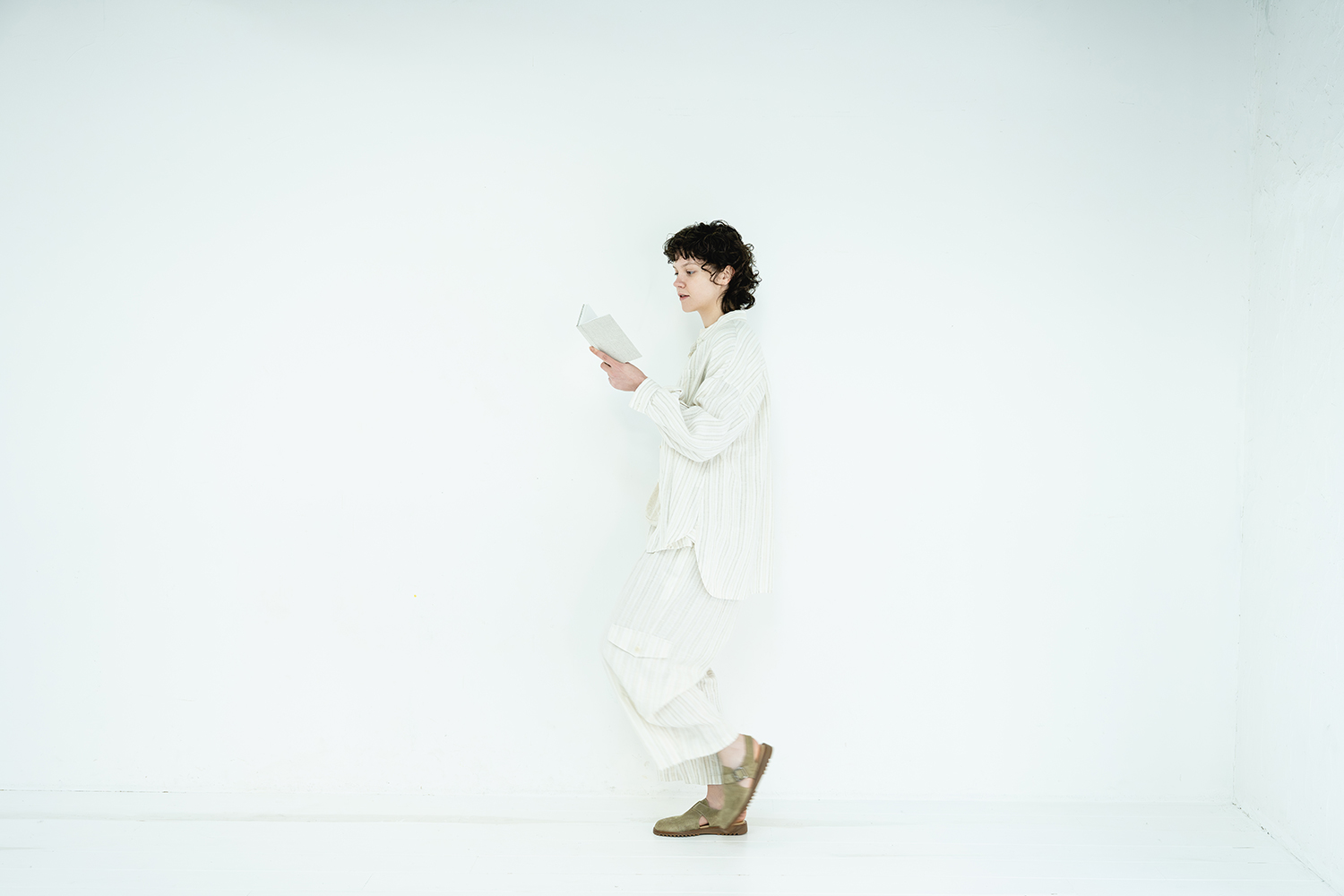

Linen Natural Stripe Oversized Shirt
Cotton Linen Sleeveless Jersey
Linen Natural Stripe Easy-fit Trousers
Paraboot
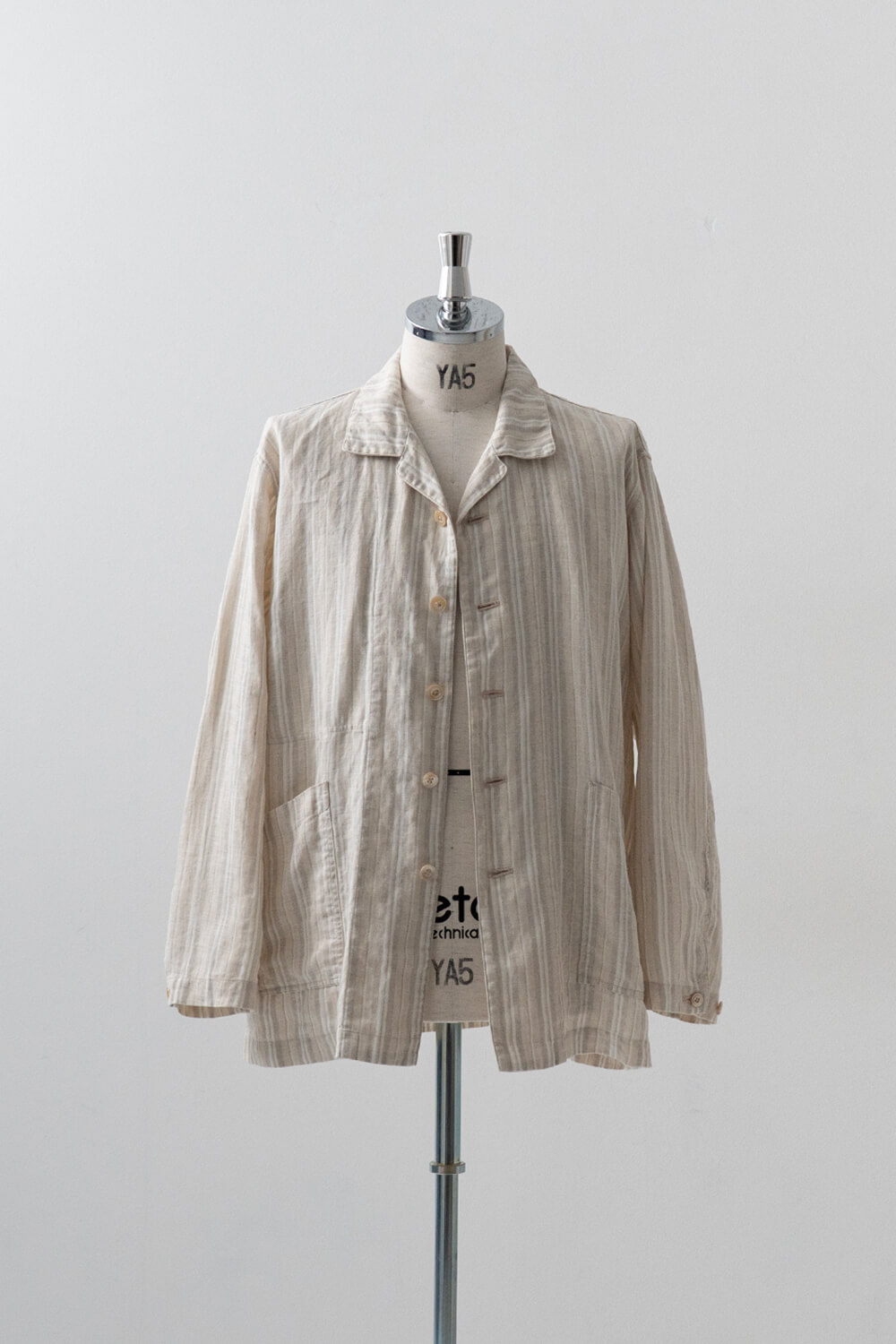
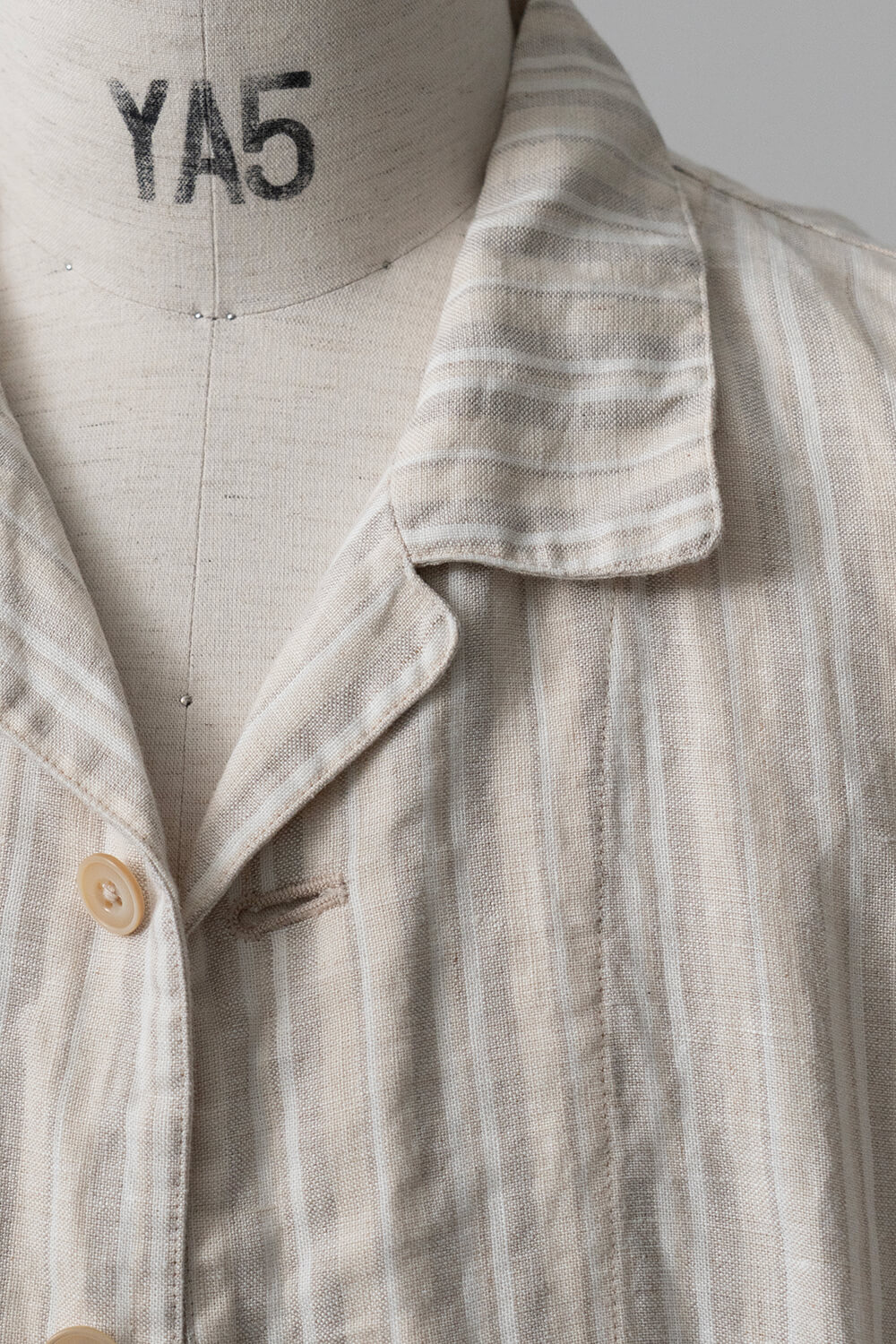
Linen Natural Stripe Jacket
style no : 02261-0008
size : 3,4
price : JPY 45,000
→ Online Shop
Linen Natural Stripe Easy Fit Trousers
style no : 02261-0009
size : 3,4
price : JPY 33,000
→ Online Shop
JACKET - Naturally Colored Linen Natural Stripe Jacket
TOP - Cotton Waffle Henry Neck Short-Sleeve Knit Pullover
TROUSERS - Wool Linen Trousers
SHOES - Paraboot
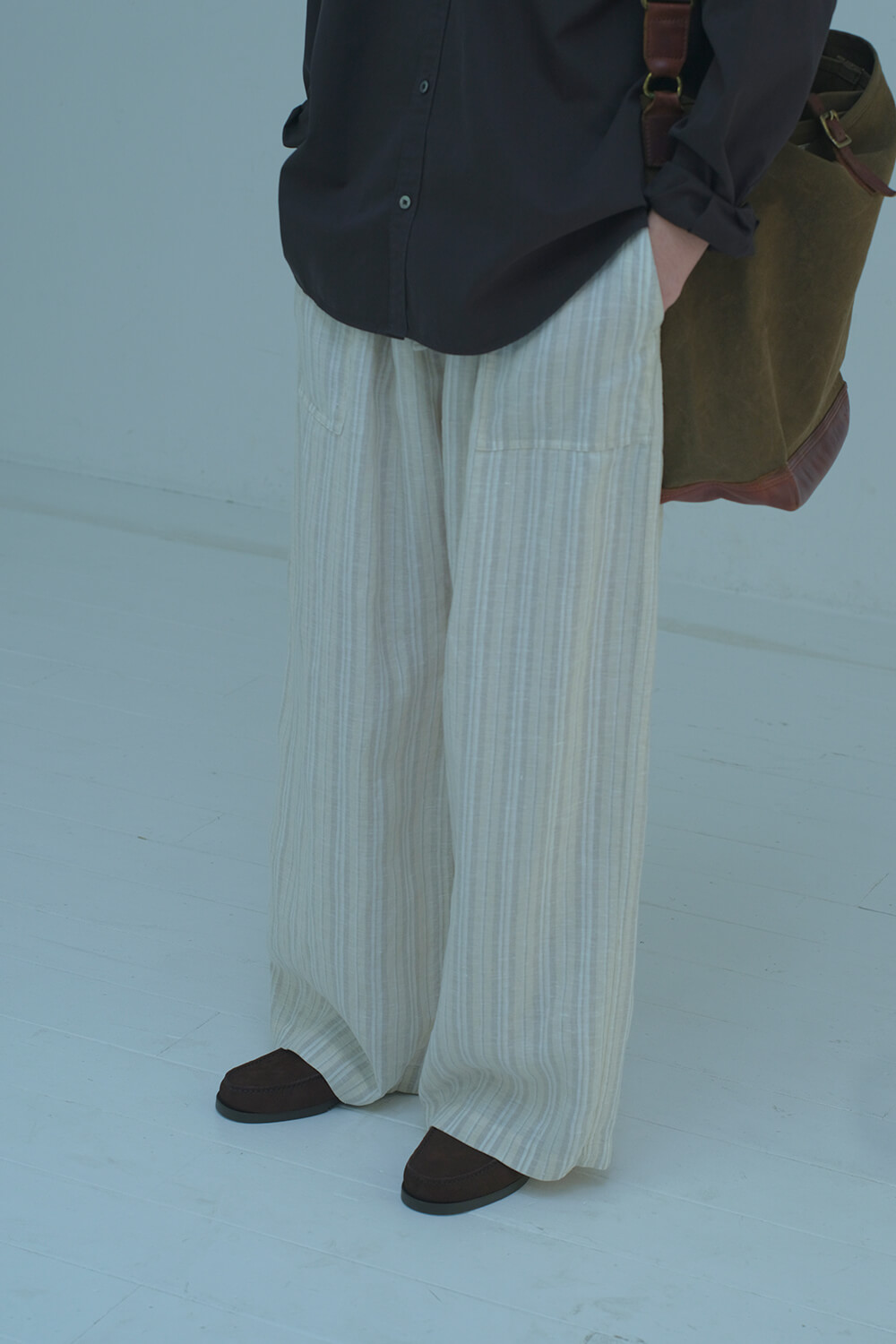
SHIRT - Nidom Finished Twill Button-Down Shirt
TROUSERS - Naturally Colored Linen Stripe Easy Fit Pants
BAG - ARTS&CRAFTS
SHOES - Paraboot